Reflecting on MIRA 2026 Resiliency Finalist Honor
As I sit here, just over a month after the original announcement of me being honored as a finalist for the MIRA 2026 Resiliency Award, I find it tough to verbalize my journey throughout my career. I had spent a month preparing a presentation to justify myself to win the award; went through many iterations of how I should showcase my story, my accomplishments, and the challenges throughout the journey.
Today I still find it difficult to know what is appropriate to share publicly, what I am comfortable sharing, and really what people need to hear about my journey. I don’t share this story to put myself on a pedestal—but to show others who face similar, or honestly completely different challenges, that it is worth continuing to push through.
When I was only six years old, life was “normal.” I played soccer, I ran around the neighborhood with my older brother and the neighbor kids, I was in 1st grade. One random day, that all changed for me. I went to school not feeling well, but that was normal for me to complain about as I loved skipping school, so my mom sent me. Before the end of the school day, I couldn’t walk. The bus driver had to carry me onto the bus just to go home. When arriving at my stop, my mom greeted me and was shocked to hear that I wasn’t able to walk off the bus—she had no idea what had occurred at school.
I was admitted to the hospital. After days of testing, they originally diagnosed me with Guillain-Barré syndrome. Additional testing results came back and that wasn’t it. After a muscle biopsy, they diagnosed me generically with Muscular Dystrophy, but no specific type. All I was told was that exercising would cause more muscle deterioration.
By 2nd grade I was in a manual wheelchair. In 4th grade I had a second muscle biopsy with no additional information. By 6th grade I moved into a powered wheelchair, and years later discovered Power Soccer and was finally able to participate in team sports again.
Skipping many personal details publicly, we jump into adulthood. At age 26 I was the unhealthiest I’d ever been. I had left consulting as working 65+ hour weeks was killing me. I would have days that I couldn’t even roll over in bed without assistance. I slept in a hospital bed with guard rails just to roll over. It was a chore to just get ready to go to work in the morning.
In early 2016 I received a call as a follow-up from my EKG and Echo. There were concerning results and I was referred to a cardiologist. I was the heaviest I had ever been, and even though I was told as a child that exercise would deteriorate my condition further, I had no choice but to disregard medical advice and start exercising. I had already purchased a manual wheelchair as a backup around the house after countless power wheelchair failures.
It took me months to build up strength to use the manual wheelchair just around my house. I continued using it outside around my neighborhood, and with a combination of an extreme diet of no more than 1000 calories a day, I had myself down sixty pounds by 2018 and started walking again—short distances at first, eventually building up to even going to the store walking.
Through all of these unknowns with my own health, with having to innovate just to move around the world and find my own way of improving my health, I was fortunate enough that in January 2024 I was told about a genetic variant of unknown significance that points to a possible diagnosis. While still not confirmed, this discovery opened the door to additional treatment options. I’ve since started a medication that has made my body feel significantly better—now I need to focus on continuing my journey to strengthen my body further.
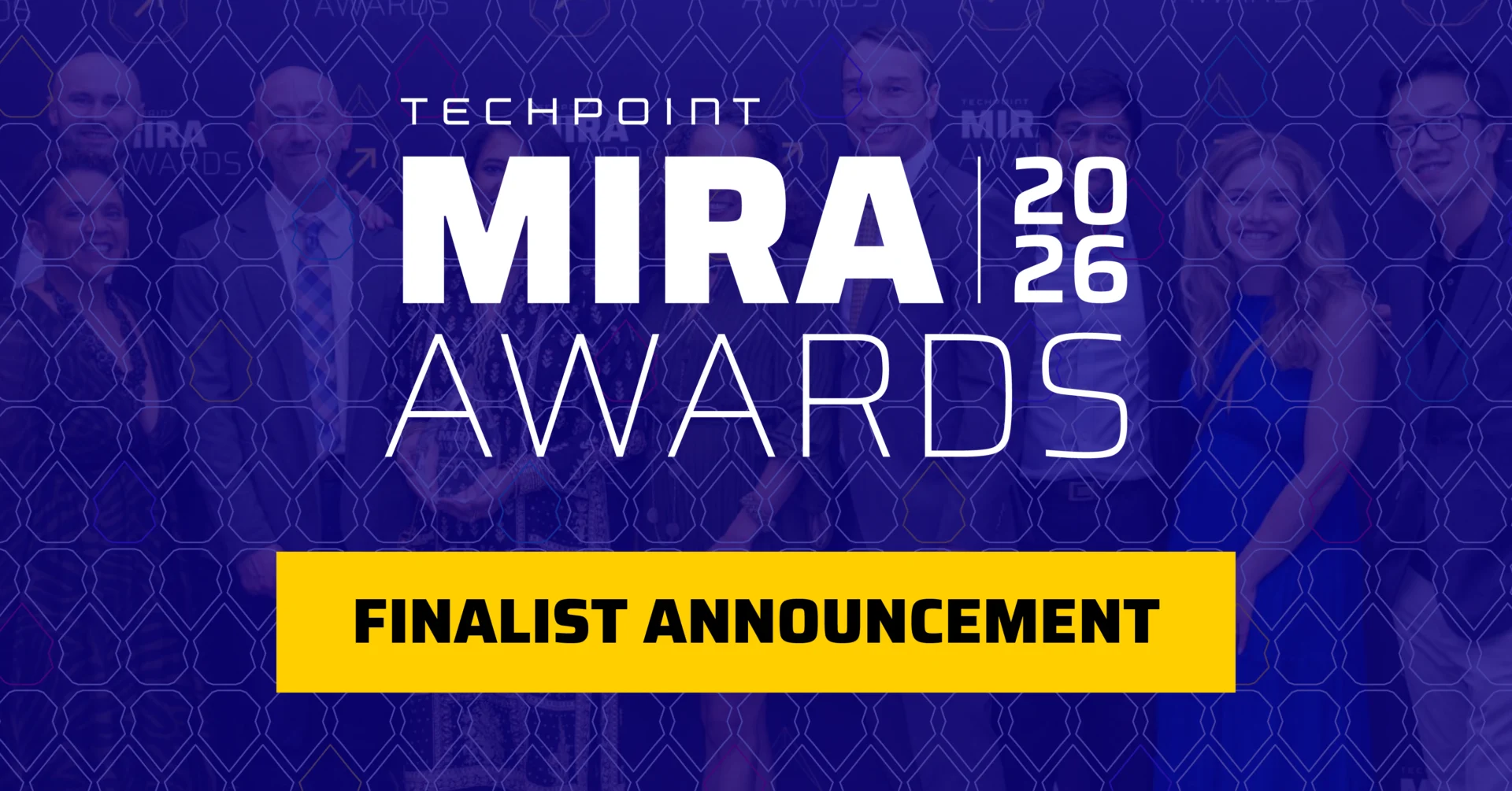
Prior to my presentation in December for the 2026 MIRA Awards, I was hospitalized with the worst weakness spell possible. I forced myself to be discharged and made it to the in-person presentation, and was honored with the finalist designation. The amazing folks at TechPoint were happy to work with me to do it remotely, but that wouldn’t truly prove my resilience, now would it?
Throughout my journey, I’ve come to realize how critical it is for the technology industry to include people from all backgrounds and experiences. When we build, support, and use technology, we need diverse perspectives at the table. Those of us who have faced physical challenges, navigated complex health situations, or simply experienced the world differently bring insights that can’t be replicated. We notice accessibility gaps. We think about edge cases. We understand that “normal” isn’t universal.
If you’re facing your own challenges—whether they resemble mine or look completely different—know that your perspective matters. The tech community needs you, your experiences, and your unique way of solving problems. Keep pushing through.